Review
The Witcher 3
an illustration of the essential experience
ludique · Review · vendredi, 25 septembre 2015 à 07:08:15 · 13 min
Ever since the first game in the "The Witcher" saga, released in 2007, I have been trying to understand how titles so riddled with flaws manage to be so satisfying. For while reviews of the three episodes have always been glowing, angles of attack are hardly lacking: messy combat, delicate handling, choices that are not as numerous as all that, sometimes shaky performance... really, there is plenty to complain about in Geralt's adventures!
This review of "The Witcher 3" attempts to explain "why it's so good overall, even though deep down every aspect of the game is going off the rails". A finding that can be generalized to quite a few other titles.
The essential experience
#"The Art of Game Design - A Book of Lenses" cover
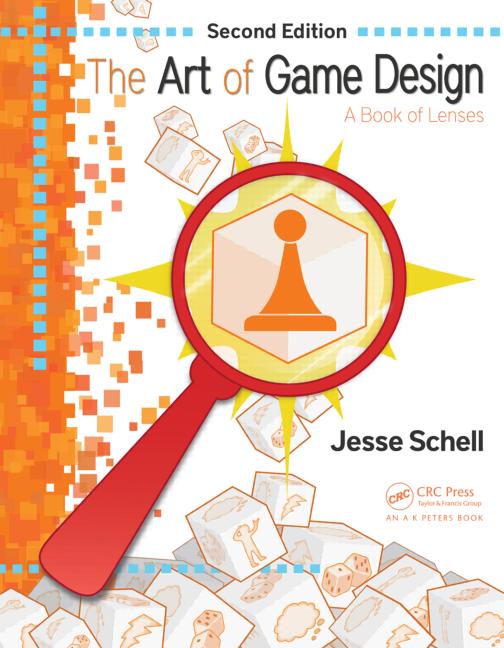
All gamers dream, sooner or later, of creating video games. The creative process nevertheless remains mysterious to anyone who does not seriously set about it: the genesis of a great game is neither a matter of chance, nor of mere "good intuition". Setting economic considerations aside, an excellent starting point is to work on "the essential experience" [1]: the point is to define the elements that transpose a "real" experience into the virtual realm. To understand better, let us take the example of football: what are the elements that give you the feeling of being a pro player during an international match? You cannot limit yourself to the physics of the ball or the artificial intelligence of the opponents; you must also take into account the noise of the crowd, and find solutions to create significant virtual stakes — all those elements that make you feel like you are there.
The concept of the essential experience could explain why some games stuffed with flaws nonetheless please the majority. A phenomenon that very likely applies to The Witcher 3.
Some context
The project's genesis
The "The Witcher" saga — or "Wiedźmin" in its native tongue — was born in the mid-80s from the pen of Andrzej Sapkowski, a successful Polish author who struggles to grasp the current scale of his work, far beyond his own little hands. No doubt absorbed by the saga during their adolescence, the developers at CDProjekt secured the license in the mid-2000s. From then on, they worked on a video game adaptation whose plot takes place after the end of the written saga. To my knowledge, this is their first video game development: until then, their activity in video games had been limited to translation and publishing on Polish territory.
The first "The Witcher" game was released on PC in 2007. Several re-editions were necessary before arriving at a definitive version, while the console version was cancelled following an imbroglio with the company in charge of the port. Four years and many setbacks later, "The Witcher 2: Assassins of Kings" showed the tip of its nose on PC, then on Xbox 360 six months later. It would take four more years for CDProjekt to deliver the end of this trilogy — nearly a decade in all.
Figure — "I think it's the success of my books that significantly affects the popularity of the games. [...] That in reality, the games made use of this fact, given that my success precedes that of the games". On the right, the Google Trends search result for The Witcher [book series] and The Witcher [game series]. Everyone will make up their own mind...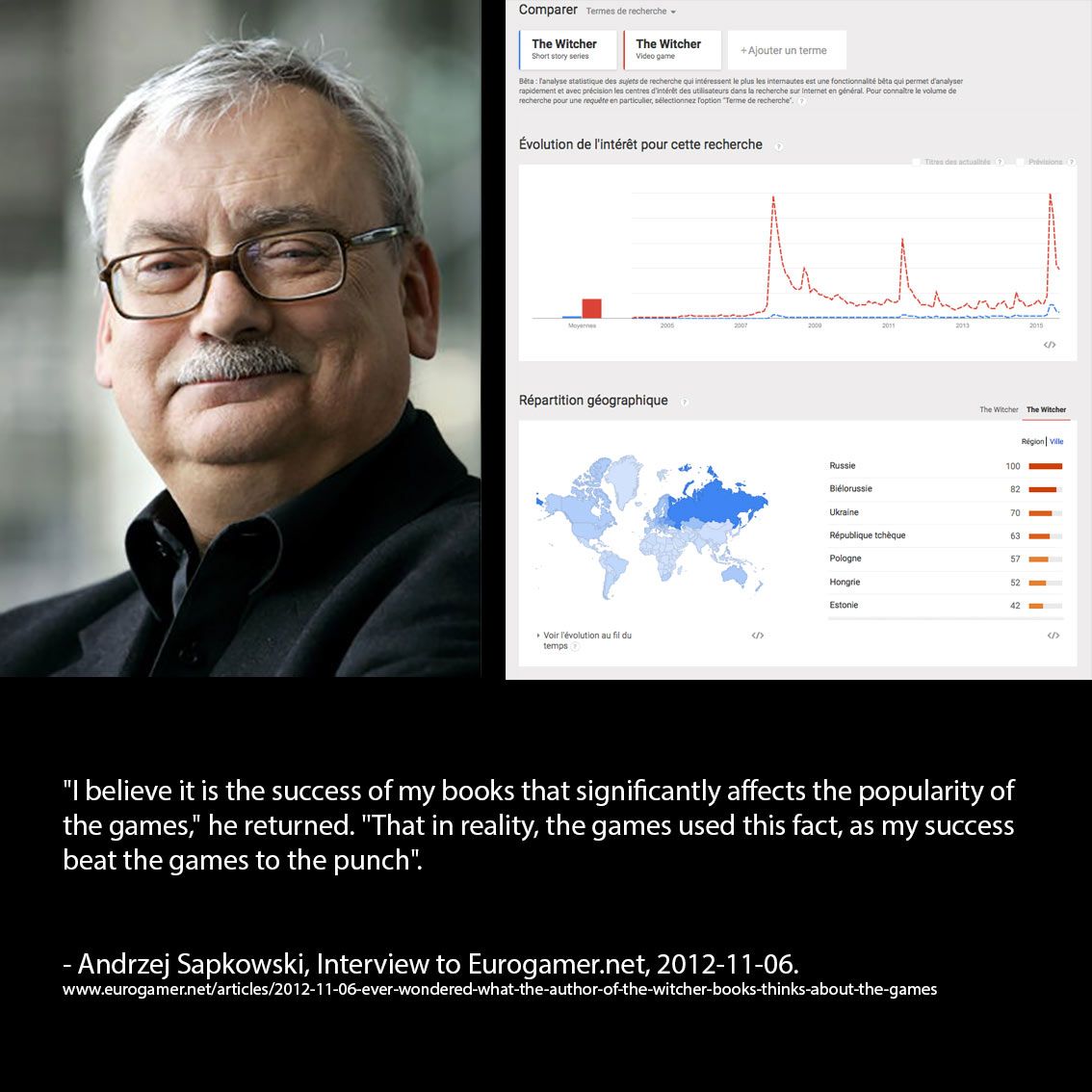
The "The Witcher" series
The story of "The Witcher" takes place in a fairly conventional medieval-fantasy universe: if the human-elf-dwarf trio makes you sigh, the centuries-old dragons and the urban vampires will finish you off. And yet, as with the Transformers, there is more than meets the eye.

Whether we speak of the books or the video games, the particularity of "The Witcher" comes from its moral ambiguity (yes, well before "Game of Thrones", its backward great-grandson…). Having grown up in a wave of political skepticism, Andrzej Sapkowski illustrates in his work the traps into which sink all those who embrace strong ideologies. In the games, the developers at CDProjekt respect this spirit: even well-intentioned individuals end up committing crimes. The protagonist of these stories, Geralt of Rivia, is a member of a brotherhood of mutant mercenaries devoted to hunting monsters: a "Witcher" (the famous "Wiedźmin"). Over the course of the written saga, he will get the chance to forge a moral code based on "neutrality" and to question the distinction between "monsters" and "humans", even if it means defending supernatural creatures against obscurantist peasants. And while we are on pitchforks and torches, another interesting aspect of the saga lies in its remarkable depiction of the medieval, rural world: human laziness, grime, and mediocrity blend brilliantly with the country air and architecture. Magic, relatively present, appears as an old esoteric science rather than as an almighty divine gift bestowed by astral entities. All these strengths give the narrative a human dimension that is sorely missing from the majority of medieval-fantasy universes.
Sigismund Dijkstra, a character who single-handedly embodies the series' narrative qualities.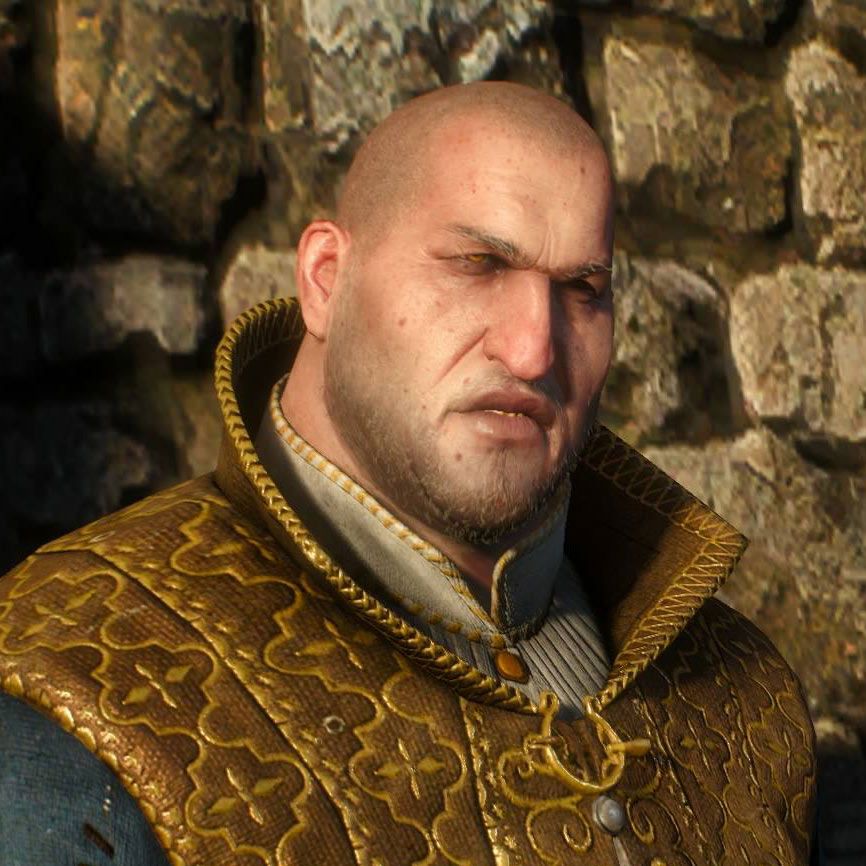
Where the first two episodes were partitioned into chapters in order to keep a tighter grip on the narrative, "The Witcher 3: Wild Hunt" takes the open-world gamble: the designers felt confident enough to maintain high narrative quality despite the option of freely exploring the playground almost in its entirety. In short, the newborn of the trilogy attempts to reconcile freedom of movement with impeccable narrative quality. Combat, character progression, and the quest system remain broadly identical to those of the second installment.
As for the story, it brings in characters present in the books though absent from the previous games: Yennefer and Ciri, respectively Geralt's partner and "adopted daughter", but also Dandelion and Sigismund Dijkstra. If the writers are to be believed, this episode was supposed to set the political side of things aside to focus on Geralt's personal quest: that is partially true, for while Geralt tries to shrug off the intrigues, he cannot fully break away from them. And happily so, given CDProjekt's talent for that kind of scenario.
The grievances
The list of complaints one can aim at this new installment of The Witcher is long.
First, there is the combat. In the first title of the series, it was a matter of clicking in rhythm to chain combos while selecting the adequate combat stance: a system that did the job. For "The Witcher 2", the developers no doubt believed that it took little to turn it into a proper "A-RPG". They had underestimated the know-how this requires: between Geralt's irritating stiffness, the lousy camera, and the calamitous collision handling, the people who got a kick out of the skirmishes of "The Witcher 2" are probably masochists. "The Witcher 3" makes Geralt a little less rigid to handle, while remaining far from the genre's finest, whether we speak of "Mount & Blade", "Dragon's Dogma", or "Dark Souls" (each in a different register). The balancing also deserves a few adjustments: on the "Death March!" difficulty, invest in Quen and Axii — the shield and mind-control signs — and you will quickly be invincible. Head to the front without them, and you will get slaughtered by the first pack of wolves that comes along. Level differences also take on too much importance: endgame drowners could decapitate the griffin you face in the introduction with a single kick. Without reaching the heights of an "Elder Scrolls: Oblivion", The Witcher 3 remains a sad example of inconsistency. We find the same problem with the human NPCs: sure, Geralt thrashes legendary monsters without breaking a sweat, but he will get flattened like a beggar by a single cardboard sword swing if you choose to attack a guard in the street (unless the scenario had planned for you to do it).
Let us set aside the clumsy approximations in the handling, the badly placed buttons (the action button, aka the "do-everything button", which will have you snuffing out candles rather than opening chests…), the limited impact of the previous installments' choices, or certain ultra-irritating enemies (the sirens, who nearly steal the world's most annoying critter prize from the Shrieker). Let us focus instead on the second big problem, the repetitiveness of the quests. "The Witcher 3" strains itself to give its quests context (it is not the first to do so, notably via endless letters found on corpses), but struggles to hide their utterly tedious workings. "Go to location X, trigger the witcher's magical senses, follow the trail, kill the monster". There is no subtlety whatsoever in the investigation system, any more than there is leeway in how to approach the situations that present themselves to Geralt.
Since we are talking about freedom, what about the famous narrative flexibility, often cited as exemplary in the series? On reflection, this reputation is unearned, so pale a figure does free will cut next to the genre's true virtuosos (Alpha Protocol, to name but the best). Here, the dialogues leave little room for your opinions, and in-mission choices are rare.
The freedom of exploration did not completely convince me either: until the arrival in Skellige, where exploration and mystery started to take over, the overwhelming majority of The Witcher's landscapes struck me as nothing but a drab succession of mud and generic little hamlets, far from the interest one could find there in the previous installments. Yes, The Witcher lost feathers in its conversion to Open World, whatever the critics may say.
To finish: a more personal and polemical note, that of the plot. The game's narrative focuses on an intimate quest, detached from the complex political situation of the Northern Kingdoms. Within the "gamer" community, this aspect was broadly applauded, because, my good lady, politics is bad. What is more, since the goal was to give the trilogy — whose throughline revolved around the Wild Hunt — an ending, the writers were well and truly forced to pit Geralt against his arch-nemesis, Eredin (sorry for the "spoiler", but his name was already revealed in The Witcher 2... and in the written saga for a long time!). Now Eredin is a pretty poor character: just a big bad elf in armor whose goal is to plunder and gather more power. His token moral dimension, addressed near the end of the game, is not enough to save him from limbo. The character's mediocrity turns the plot into a mundane struggle of "the good guys closing ranks" against "the cruel villains who threaten them". To drive the point home, we are treated to certain easy "emotion" sequences (two cheap deaths, whose narrative impact is next to nothing), as if the script had suddenly run out of inspiration.
Eredin, the Big Bad Mwahaha.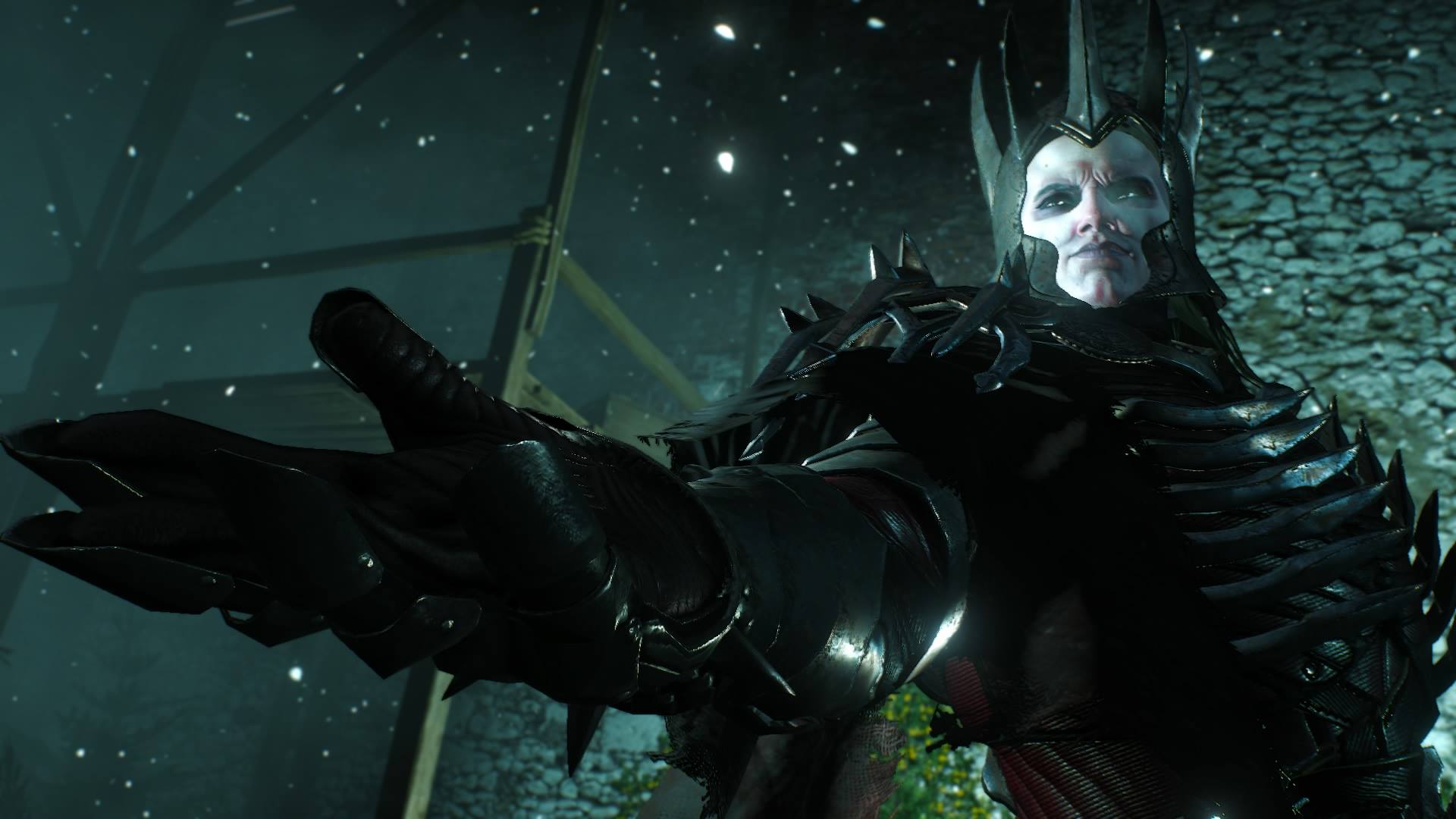
The mirror of grievances
The Witcher 3's score, as of the writing of this article: an 8.6/10 average on Sens Critique, median 9/10, second in the "Top 111" of best games, all categories combined.
The points I made above are almost unanimously shared among the people who have tried The Witcher 3. And yet the general feeling is extremely positive. How does that work? Let us go back over it point by point.
The combat, first, is indeed unpleasant. Just like that of the "Elder Scrolls". Just like that of a good part of the Japanese A-RPGs ("Kingdom Hearts", I am looking at you). Is that enough to condemn all these titles? When you think about it a little, the series' clumsy jousts push players to act like witchers: venture into a high difficulty setting, and you will quickly feel the need to learn about the monsters you hunt and to equip yourself accordingly. So you will go pore over volumes to find out which weapons are most effective against your target, then you will go pick the herbs or gather the components needed for the mixtures you require, and only then will you engage in combat. Which will unfold perfectly, because, as a good witcher, you leave nothing to chance. Here we have a component of the famous essential experience mentioned at the beginning of the article.
This essential experience is reinforced by the structure of the quests. Yes, the investigation phases offer practically no stakes, yet Geralt's monologues and the gradual discovery of the trails induce the feeling of being a sleuthhound — which is precisely what witchers are meant to be. When, on top of that, the said monologues are well voice-acted, sometimes piquant, and reinforce the protagonist's personality, how can one complain about the repetitiveness of the tasks set before us?
As for narrative freedom, it is certainly not omnipresent, but every choice that crosses your path will have interesting repercussions, in the short or the long term. The series' true strength lies in the way it confronts players with their previous choices, without leaving them the possibility of reloading a save taken five minutes earlier to pick the path that seems optimal to them. Here, many consequences only land several hours after you have made a choice. This constant pressure, sometimes reinforced by a limited time to decide, develops another aspect of the essential experience of The Witcher: the ambiguous decisions Geralt is called upon to make.
Beyond these "mirror" elements that explain some of the game's flaws, The Witcher 3 also has qualities of its own. Technically and artistically, it dazzles the retina (despite the controversy over its "downgrade", and even though the scenery repeats across two of the three game areas): it is teeming with life, with small details that make you feel like you are there. The writing quality has taken an undeniable leap: it was already high in the previous episodes, but this truly reaches one of the best levels in the video game world. If we set aside a few of Geralt's "softy-dad" impulses and Eredin's grand-villainy, it is simply a faultless performance: the characters are as credible and interesting as ever, and it has never been as funny to get drunk with your idiot buddies as in The Witcher 3. Better still: Geralt's excessively "skirt-chasing predator" side has faded away in favor of a form of self-deprecation, where the witcher ends up the butt of the joke more often than a Casanova.
The islands of Skellige offer memorable panoramas.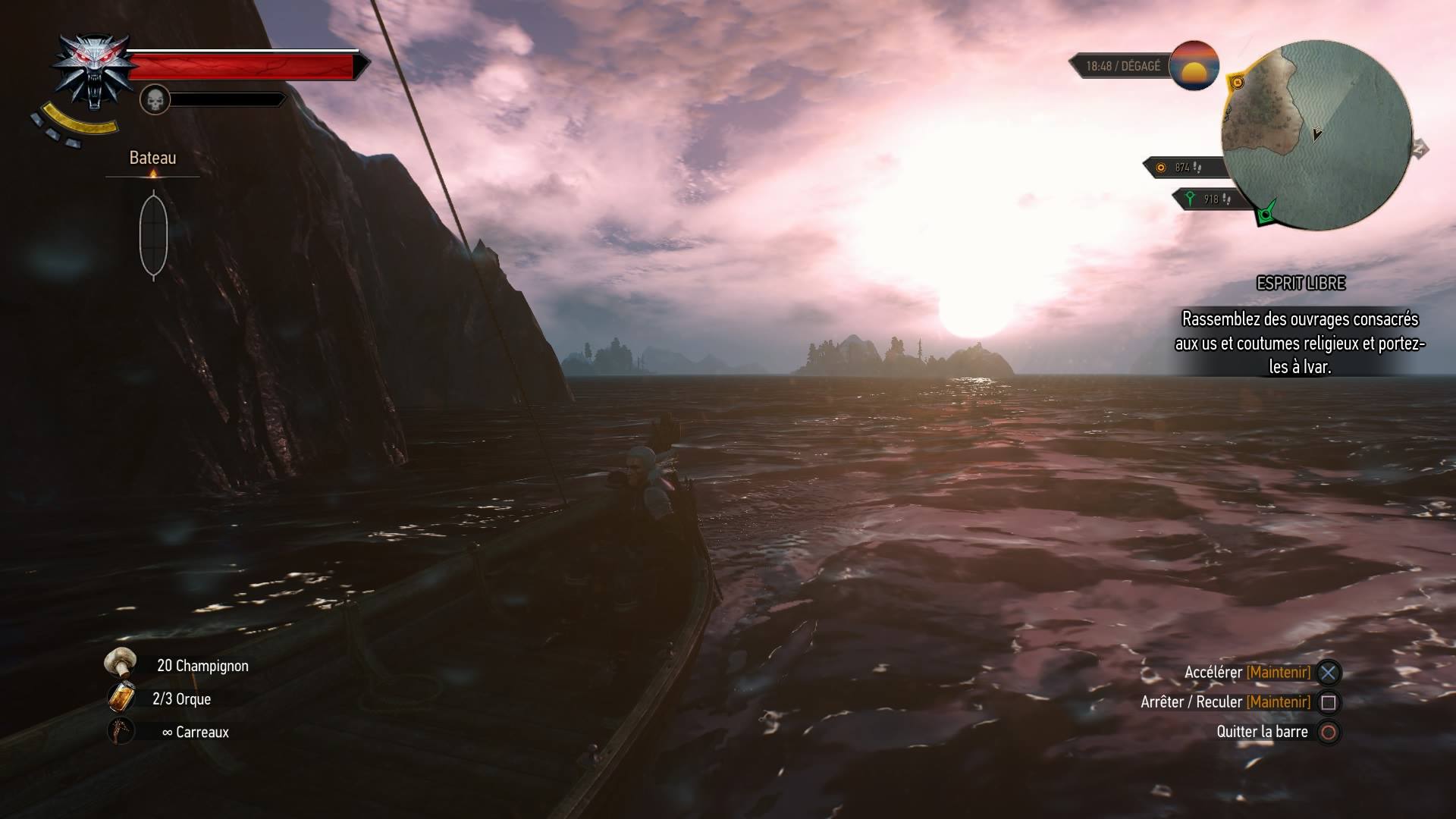
Like others before them, The Witcher games have always sacrificed gameplay on the altar of the essential experience and of narration. Their tour de force is to offer sequences just pleasant enough to play that the magic keeps working for 90% of the audience.
In the end, I have only one and a half complaints (or rather, 1.33 complaints) toward The Witcher 3: its transformation into an Open World was not as conclusive as it should have been, and its plot — clearly below the previous installments — is only partially mopped up by the quality of its writing. Apart from that, The Witcher 3 admirably closes out a saga that is getting on in years, without ever betraying its gameplay or ethical ambitions.
Schell, J. (2014). The Art of Game Design: A book of lenses. CRC Press. ↩︎